Fall Magic
I purchased Asclepias tuberosa, aka butterfly weed or milkweed (not butterfly bush) from a local native plant nursery about 4 years ago. I planted the small starter in the sun down by our sidewalk. It would thrive in the hell strip. I could fill it completely with milkweed, but I don’t think my HOA would approve.
Since planting, all I’ve seen on the plant are milkweed bugs. All I’ve done is collect seeds in the fall and pull the gripe weed that was competing with rhizome younglings popping up.
There are suggestions to encourage the appearance of Monarchs like pruning the milkweed mid-season so that the leaves are more tender when the Monarchs are laying their eggs, or whacking the entire plant during the season so it will give off more of its scent, but so far, I’ve left the plant to grow in peace and do what it does.
About the same time I also planted Conoclinium coelestinum, aka blue mistflower in three locations. Directly behind the milkweed, by the front door, and in the back side yard. Mistflower spreads freely and its multi-floral blooms add up to a showy late season display with great late season nectar for migrators like the Monarch. It’s been thriving and spreading too.
Briefly I thought about raising Monarchs to introduce to the plant, but learned that it’s not recommended. Captive breeding can increase problems like disease and parasites that may harm wild populations when they are released.
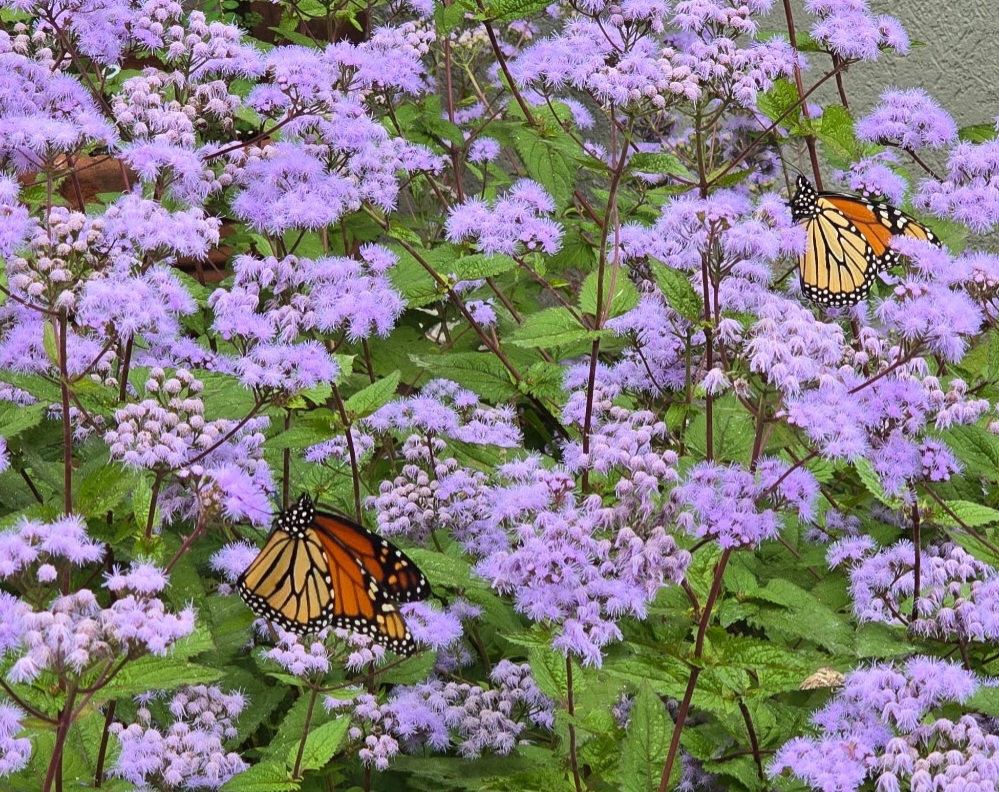
I’ve been so patiently biding my time that I gasped when we walked out the front door a few days ago and saw three Monarchs right there dining on blue mistflower nectar. I don’t know if they emerged from my own milkweed. I looked for a spent chrysalis, but not hard. They are transparent when empty. I don’t know if they found safe harbor when the remnants of Hurricane Isaias blew through a day later. What I do know is that I gave these regal visitors back a few imperfect square feet of their habitat and they graced me with their presence. Beautiful.